
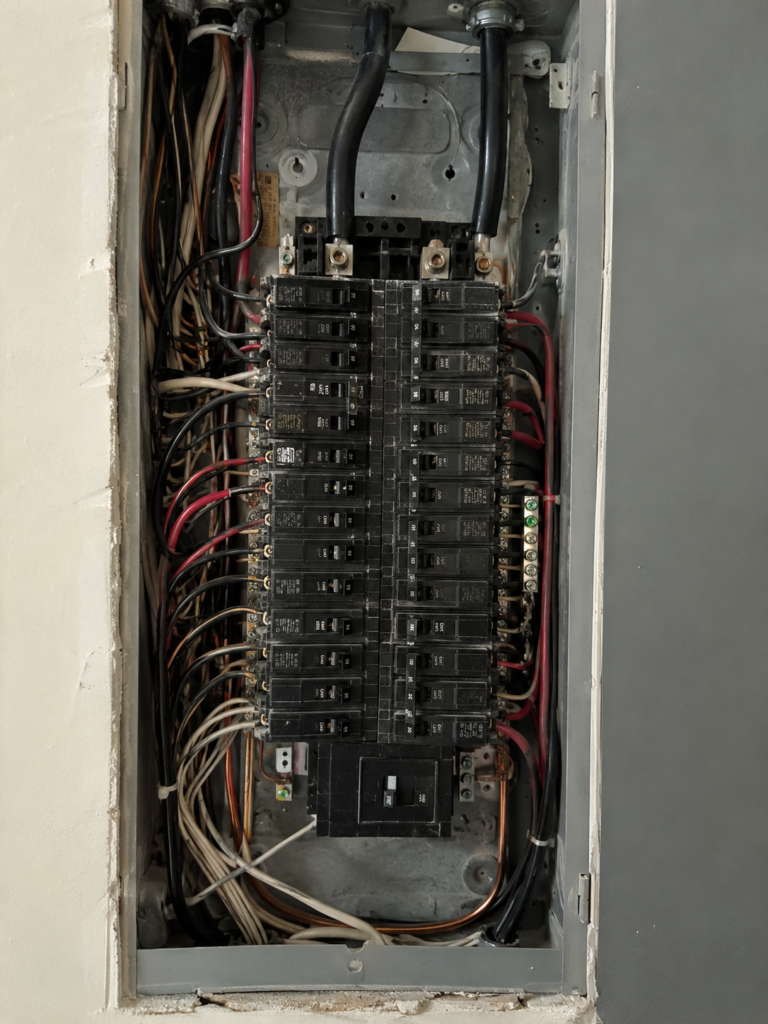
Finding out your house has aluminum or outdated wiring can feel like discovering a problem you didn’t know existed.
It’s more common than most homeowners realize.
A lot of Las Vegas homes built in the 1960s and early 1970s were wired with aluminum instead of copper. It wasn’t a mistake at the time. Aluminum was a common, approved building material during a stretch when Las Vegas was growing fast and copper prices had spiked. It’s just aged in a way that makes buyers, lenders, and insurance companies nervous today, decades later.
If your house falls in that build-year range, you’re in good company. A meaningful share of the valley’s older neighborhoods share the same wiring, which is exactly why it comes up so often during Las Vegas home sales and insurance renewals.
Why Aluminum Wiring Worries Buyers and Insurers
Aluminum expands and contracts more than copper does as it heats and cools. Over decades, that movement can loosen connections at outlets, switches, and the breaker panel. Loose connections create heat. Heat is what insurers and inspectors are actually worried about.
During a financed sale, older wiring can:
- trigger a flag on the home inspection report
- cause an insurer to require an electrical evaluation before writing a policy
- lead to a request for rewiring or professional remediation before closing
- delay or complicate the buyer’s financing approval
None of that means the house is unsafe to live in as it sits. Plenty of Las Vegas homeowners have lived in these houses for decades without incident. It just means a traditional sale often comes with extra steps that a newer-wired house wouldn’t require.
There’s also an insurance angle worth knowing about on its own, separate from any sale. Some carriers have gotten stricter about writing or renewing policies on homes with known aluminum wiring, sometimes asking for proof of an electrical inspection or professional remediation before they’ll cover the property. If your policy has ever come up for extra scrutiny at renewal time, wiring age is one of the quieter reasons why.
You Don’t Always Have to Rewire the Whole House First
Some sellers assume the only path forward is a full rewire, which can be expensive and disruptive. That isn’t always true.
Depending on the situation, sellers sometimes:
- have specific connections repaired with approved splice methods rather than replacing every wire
- disclose the wiring type and let the buyer factor it into their offer
- sell as-is and let the next owner decide how to handle it
Which approach makes sense usually comes down to timeline, budget, and how much of the house is actually affected.
When Selling As-Is Makes More Sense
A full rewire can mean weeks of electricians in and out of the house, opening walls, and a bill that runs into the thousands before you’ve fixed anything else. If you’re already planning to move, or you’re managing an inherited or rental property from a distance, that’s a lot to take on before you can even list.
Selling directly lets some homeowners skip that step entirely. The buyer takes on the wiring as part of the property, and you’re not the one coordinating electricians and inspections on a house you’re trying to leave behind.
A Practical Path Forward
At Fast Ready Offer, we talk with Las Vegas homeowners who assume outdated or aluminum wiring means their house isn’t sellable, or that it has to be fixed first. Usually, neither is true.
We buy houses as-is, wiring and all — no electrical inspection to pass, no remediation to schedule, no repairs required before we can make an offer. If you want to see what a direct sale could look like next to the cost of rewiring first, you can request a no-obligation cash offer and compare your options side by side. It’s a similar decision to what homeowners face with a house that failed inspection for other reasons — the repair path isn’t always the only path.
Selling as-is can sometimes be the simplest way to move forward when the wiring is part of the picture.
Close on your terms.
FREQUENTLY ASKED QUESTIONS
How do I know if my house has aluminum wiring?
Homes built roughly between 1965 and 1973 are the most likely candidates. An electrician or home inspector can confirm it by checking the wire markings at the panel or an outlet.
Is aluminum wiring dangerous?
It isn’t automatically unsafe, but it’s more prone to loose connections over time than copper, which is why insurers and inspectors pay close attention to it.
Will insurance companies cover a house with aluminum wiring?
Some will, sometimes with conditions like a prior electrical inspection or proof that connections were professionally addressed. Policies and requirements vary by insurer, so it’s worth checking directly with yours or a prospective buyer’s.
Do I have to rewire the whole house to sell it?
Not necessarily. Some sellers handle it with targeted repairs, some disclose it and sell at a price that reflects it, and some sell as-is and let the buyer decide.
Can a house with aluminum wiring still pass inspection?
It depends on the inspector and the buyer’s lender. Some inspections flag it as a condition to address; others simply note it for the buyer’s awareness.
What does selling as-is mean for the wiring specifically?
It means you’re not required to repair, replace, or remediate anything before selling. The buyer takes the property, including the wiring, exactly as it is.
Does outdated wiring always mean aluminum wiring?
No. “Outdated” can also mean older copper wiring, knob-and-tube in much older homes, or a panel that’s simply undersized for a modern household. An electrician can tell you which situation you’re actually dealing with.