
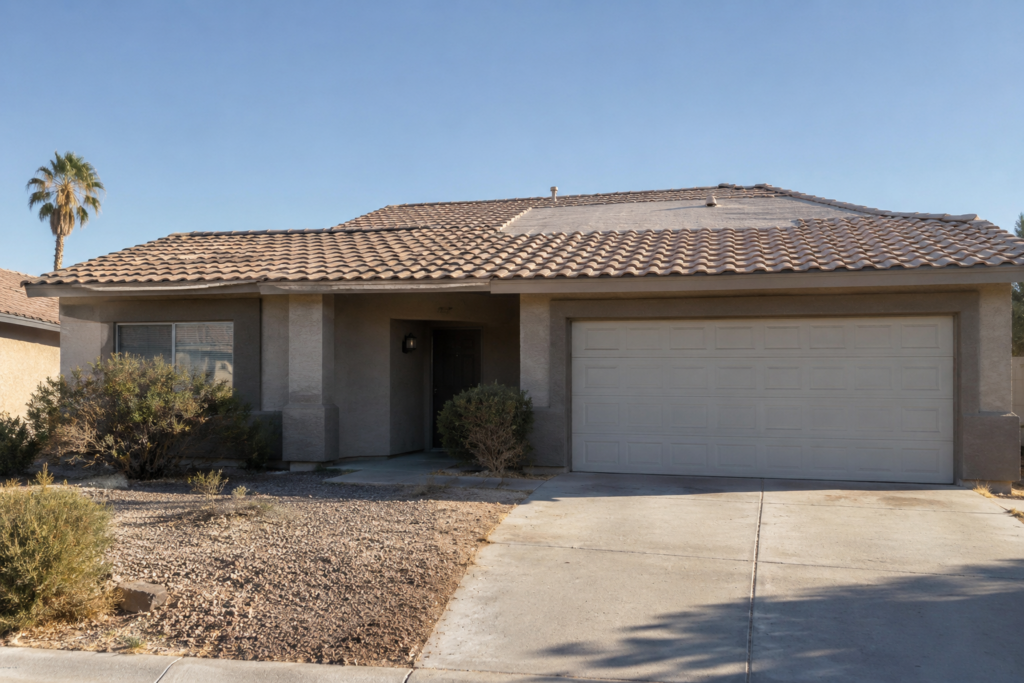
A roof is easy to ignore right up until somebody else looks at it.
Then an inspector mentions it. Or an insurance company sends a letter. Or an agent walks the property and gets quiet.
If the roof on your Las Vegas house is old, patched, or leaking, here’s the short answer: you can still sell it. A bad roof changes how the sale works. It does not decide whether the sale can happen.
Why the Roof Carries So Much Weight
Most buyers in a traditional sale are borrowing money, and a roof sits at the intersection of everything a lender worries about.
During a financed sale, roof problems can:
- show up on the buyer’s inspection report
- affect the appraisal
- slow or stall lender approval
- make it harder for the buyer to line up their own insurance
- turn into repair demands or a renegotiated price
None of those are automatic. But any one of them can add weeks, and a couple of them together are what usually kills a deal.
What a “Bad Roof” Usually Means Here
Las Vegas is tough on roofs in a specific way. It isn’t hail or snow load. It’s years of hard sun and heat cycling, then a few monsoon storms that find whatever the sun already loosened.
So a Vegas roof problem usually looks like one of these:
- an original roof that’s simply reached its age
- cracked or slipped tile with worn underlayment beneath it
- a flat or low-slope section where the coating has failed
- a leak that’s already stained a ceiling inside
- a patchwork of repairs done by different people over the years
The last one matters more than sellers expect. A roof with a history of small fixes is harder for anyone to price than a roof that’s plainly at the end of its life.
The Insurance Part Most Sellers Don’t See Coming
This is the piece that surprises people. Even when a buyer is willing to take the roof as it is, their insurer may not be.
Insurers have gotten stricter about roof age and condition, and a policy that can’t be written is a sale that can’t close. If you’ve been dealing with a non-renewal or a cancellation notice of your own, our post on home insurance canceled in Las Vegas walks through what’s driving that.
It’s worth knowing about early, because it can quietly shape your buyer pool before you ever get an offer.
Your Three Real Options
Replace it first. You get the cleanest listing and the widest buyer pool. You also pay for the roof up front, wait on scheduling and materials, and hope the appraisal reflects it. Sometimes it does. Sometimes it doesn’t.
Sell on the market and offer a credit. This keeps money in your pocket now, but the buyer’s lender and insurer still have to say yes, and a credit doesn’t fix that.
Sell as-is to a cash buyer. No repair, no credit negotiation, no lender or insurer in the middle of it. You trade some price for certainty and speed.
There’s no universally right answer. It depends on how much cash you have available, how fast you need to move, and how much uncertainty you’re willing to carry.
When Selling As-Is Makes More Sense
If the roof is one problem on a list — an inherited house that’s been empty, a rental you’re done with, a home you’ve already moved out of — repairs tend to snowball. You fix the roof and find the ceiling. You fix the ceiling and find the insulation.
That’s the point where a lot of homeowners decide they’d rather be done.
At Fast Ready Offer, we’re a family-owned cash buyer, and we’ve purchased more than 500 homes since 2017. We buy as-is, roof included. No repairs, no cleanup, no agent commissions, no closing costs on your end. A fair cash offer within 24 hours, and closing in as little as 7 days — or later, if you need the time.
If you want a real number to compare against a roof quote, you can request a no-obligation cash offer and put the two side by side. Plenty of sellers look at both and decide to replace the roof and list it. That’s a good outcome too. The goal is a decision made with actual numbers instead of dread.
Close on your terms.
FREQUENTLY ASKED QUESTIONS
Do I have to replace the roof before selling my house in Las Vegas?
No. You can sell with the roof as it is. Replacing it may widen your buyer pool, but it isn’t required, and it isn’t always the better financial move once you account for the cost and the wait.
Do I have to disclose a roof leak?
Yes — known material defects belong on your seller disclosure, and a past or current leak is one. Disclosing is also what protects you afterward. For how the disclosure rules apply to your specific situation, check with a Nevada real estate attorney or your title company.
Will a bad roof kill an appraisal?
It can affect it, and in some financed transactions a lender will require repairs before funding. That’s a lender-by-lender call, not a rule that applies to every sale.
Can I sell a house with a roof leak that’s already damaged the ceiling?
Yes. Interior damage from a leak is common in as-is sales. It matters for pricing and for disclosure; it doesn’t make the house unsellable.
Why would insurance be a problem if I’m the one selling?
Because your buyer needs their own policy to close a financed purchase. If insurers won’t write on the roof, the buyer can’t close — even when they personally don’t mind the roof.
Is a patched roof worse than an old roof?
Not worse, but often harder to price. A roof at the end of its life has a fairly predictable replacement cost. A roof with layers of assorted repairs is harder for anyone to evaluate from the outside.
Do you buy houses with roof damage?
Yes. We buy as-is across Las Vegas and Clark County — roof, ceiling, and whatever else is on the list.
- How we buy Las Vegas houses as-is
- Can You Sell a House That Failed Inspection in Las Vegas?
- Why Selling a House As-Is Is NOT What Most Sellers Think
Get my cash offer or call (725) 210-6339