
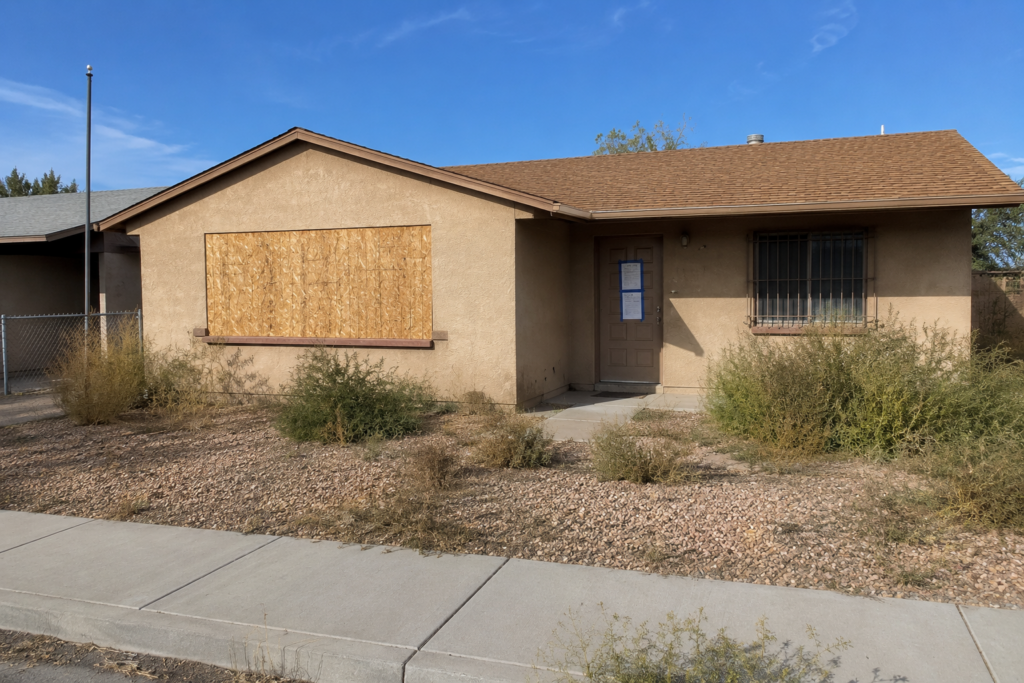
Getting a notice that your house has been condemned feels final.
We buy houses in this condition. See how we buy Las Vegas houses as-is, with no repairs, cleaning or commissions.
It usually isn’t.
Condemned does not mean the property is worthless, and it does not mean the property can’t be sold. It means a local authority has determined the house isn’t safe to occupy in its current condition. That is a serious problem, but it is a solvable one — and many Las Vegas homeowners in this position have more options than they think.
What “Condemned” Actually Means
A condemnation is a code enforcement decision. A city or county inspector has concluded the structure is unfit for people to live in until specific issues are addressed.
Common triggers include:
- major structural or roof damage
- no working water, sewer, gas, or electrical service
- unsafe or hazardous wiring
- extensive fire, smoke, or water damage
- severe mold, pest infestation, or accumulated debris
- long vacancy with unsecured openings
Two things surprise people most.
First, condemned rarely means demolition. In most cases the designation can be removed once the cited conditions are corrected and the property passes reinspection.
Second, you still own it. Code condemnation is not the government taking your property. You keep title, and you keep the right to sell.
Worth noting: the process, notices, and appeal windows differ depending on whether the house sits in the City of Las Vegas, North Las Vegas, Henderson, or unincorporated Clark County. Your local code enforcement office can tell you exactly what was cited and what would clear it.
Why Traditional Buyers Usually Can’t Touch It
The real obstacle isn’t legal. It’s financing.
Most lenders will not fund a house that has been declared uninhabitable. There’s no collateral they’re comfortable with, and government-backed loan programs generally have minimum property condition standards that a condemned house won’t meet.
So the ordinary buyer — the one with a pre-approval letter, shopping on the MLS — is effectively removed from your buyer pool. That is why condemned houses tend to sit and why the offers that do come in are cash offers.
Insurance often tightens up too. Standard homeowners policies generally aren’t written for vacant, abandoned, or condemned properties, and if the condition came from long-term neglect rather than a covered event like a fire, a claim may not help.
Your Three Realistic Paths
One — fix it and clear the condemnation. If the citations are relatively narrow — restore utilities, repair a roof, remediate mold — this can be worth it, especially if you have equity and time. Pull permits, correct the cited items, request reinspection, then sell normally.
Two — list it as-is on the market. Possible, but slow. You are marketing to a small pool of cash investors who will be pricing in demolition or full rehab. Expect a longer timeline, and expect condition-based renegotiation.
Three — sell directly to a cash buyer. No financing to fall through, no repairs to complete first, no reinspection to wait on. Fastest and simplest, though the offer reflects the condition and the work involved.
One thing that isn’t optional in any of these: disclosure. Nevada sellers are generally required to disclose known defects, and a condemnation notice is about as known as a defect gets. Trying to paper over it invites problems after closing. Being upfront actually makes a cash sale easier, because that buyer is pricing the condition anyway.
When Selling As-Is Starts to Make Sense
Do the honest math before you decide.
Add up the repair estimates, the permit costs, the reinspection timeline, and the months of taxes, insurance, utilities, and possible code fines while the work happens. Then compare that to what an as-is sale actually puts in your pocket today.
Sometimes fixing it clearly wins. If the citation list is short and you have the cash on hand, repairing and clearing the designation may net you meaningfully more.
Sometimes it clearly doesn’t — especially if the house was inherited, you’ve already moved, the fines are accruing, or the estimates keep coming back higher than the last one.
At Fast Ready Offer, we’re a family-owned cash buyer that has purchased more than 500 homes since 2017, and we buy as-is in any condition — condemned, uninhabitable, fire-damaged, vacant, and everything in between. No repairs, no cleaning out, no agent commissions, no closing costs on your end. A fair cash offer within 24 hours, and closing in as little as 7 days, or later if you need the time.
We’re cash buyers, not attorneys or contractors, so treat this as a plain-English overview and confirm the specifics of your citation with your local code enforcement office.
If you’d like to see a real number before committing to anything, you can request a no-obligation cash offer and set it beside your repair quotes. If the repairs win, do the repairs. The point is having both numbers in front of you.
And if you’re earlier in this process — cited but not yet condemned — our guide to selling a house with code violations in Las Vegas covers that stage.
A notice on your door is not the end of your options.
Close on your terms.
FREQUENTLY ASKED QUESTIONS
Can you legally sell a condemned house in Las Vegas?
Yes. Condemnation means the house can’t be occupied in its current condition. You still hold title, and you can still sell it — most often to a cash buyer or investor.
Does condemned mean the house will be demolished?
Usually not. Demolition is reserved for the most severe cases. Most condemnations can be lifted once the cited conditions are corrected and the property passes reinspection.
Will a buyer be able to get a mortgage on it?
Almost never. Most lenders won’t finance a property declared uninhabitable, which is why cash buyers are the realistic market.
Do I have to disclose that the house was condemned?
Yes. Nevada sellers are generally required to disclose known material defects, and a condemnation notice qualifies. Disclose it — it rarely hurts a cash sale and hiding it creates real risk.
Will homeowners insurance pay for the repairs?
It depends entirely on the cause. Damage from a covered event like a fire may be covered; deterioration from long vacancy or neglect generally is not. Standard policies also often exclude vacant or condemned properties. Check with your carrier.
What happens to my mortgage if the house is condemned?
The loan doesn’t disappear — you still owe it. That’s a good reason to talk with your lender early, and it’s often a reason sellers look at a faster sale.
Are code fines and liens a problem for selling?
They usually get resolved through escrow at closing rather than blocking the sale. They do tend to grow over time, which is why waiting often costs more.
Do you buy condemned houses?
Yes. We buy as-is in any condition across Las Vegas, Henderson, Clark County, and Pahrump and Nye County — including condemned and non-habitable properties.
- Selling with code violations or liens
- Can You Sell a Hoarder House in Las Vegas?
- Can You Sell a House With Unpermitted Work in Las Vegas?
Get my cash offer or call (725) 210-6339