
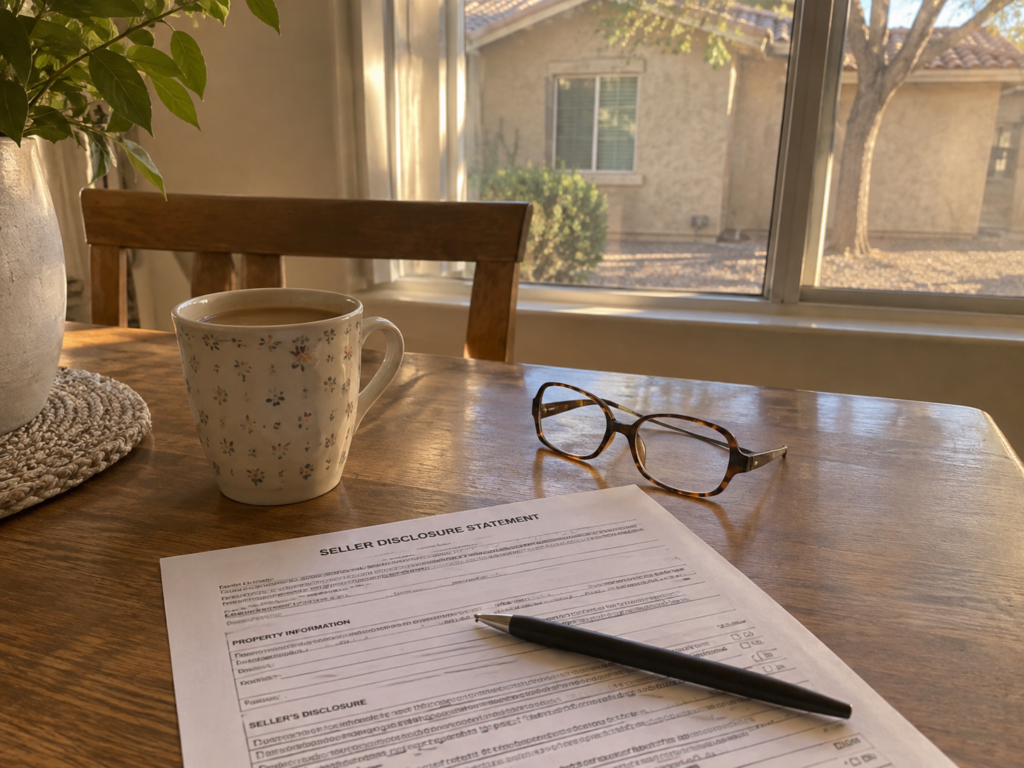
You’ve decided to sell your house as-is.
No repairs. No fix-up list. No contractor quotes.
So a fair question comes up next: do you still have to tell the buyer what’s wrong with it?
In Nevada, the short answer is usually yes.
That can sound like bad news. Most of the time, it isn’t. Disclosure is simpler than people expect, and it actually protects you.
What “As-Is” Actually Means
Selling as-is means you’re not fixing anything before the sale. The buyer takes the house in its current condition, and the price reflects that.
What as-is does not mean is hiding what you know.
Those are two separate things. As-is is about repairs. Disclosure is about information.
Nevada’s Seller Disclosure Form
Most Nevada sellers of residential property fill out a state form called the Seller’s Real Property Disclosure. It has to be given to the buyer at least 10 days before the sale closes.
The form walks through the major parts of the house, including:
- roof, plumbing, electrical, heating and cooling
- foundation and structural issues
- water damage, mold, or past flooding
- work done without the required permits
- HOA issues and other known problems
Here’s the part that surprises people: in Nevada, a buyer can’t waive the form, and a seller can’t require a buyer to waive it as a condition of the sale. That holds even in an as-is deal.
A few kinds of sales are exempt, such as foreclosure sales, transfers between co-owners, spouses, or close relatives, and certain sales handled by a fiduciary. If you’re not sure whether your sale qualifies, your title company or a Nevada real estate attorney can tell you.
What You Have to Disclose (and What You Don’t)
The rule is built around what you actually know.
- You disclose problems you’re aware of.
- You’re not required to disclose a defect you don’t know about.
- You don’t have to hire an inspector to go looking for new problems.
- The completed form is not a warranty. It’s a statement of what you know.
One thing to remember: if you learn about a new problem after you’ve handed over the form, tell the buyer before closing.
Why Honesty Protects You
Disclosure isn’t just a box to check. Skipping it can come back on the seller.
Under Nevada law, if the form is never provided, the buyer can usually back out before closing. And if a seller knew about a defect and didn’t disclose it, the buyer may be able to recover up to three times the cost of repairing it after the sale, plus court costs and attorney’s fees.
Writing down “the roof leaks over the back bedroom” takes ten seconds. A lawsuit takes a lot longer.
Why Disclosure Feels Scarier Than It Is
Most sellers worry that listing every problem will scare buyers off.
With a financed buyer, sometimes it does. A long disclosure can make a lender nervous, trigger extra inspections, or lead to a repair request that sends you right back to the fix-up list you were trying to avoid.
With a buyer who’s already planning to buy the house as-is, it usually goes differently. The disclosure mostly confirms what they’ve already seen and already priced in. No surprises means fewer reasons for the deal to fall apart. If you want a deeper look at how as-is sales work, our guide on what it means to sell your house as-is walks through it.
This is general information, not legal advice. Your title company or a Nevada real estate attorney can confirm exactly what applies to your sale.
When Selling As-Is to a Cash Buyer Makes Sense
If your house has a list of known issues and you don’t have the time, money, or energy to fix them, selling directly is often the simplest path.
At Fast Ready Offer, we’ve bought 500+ homes since 2017, many of them with problems the owners were nervous to write down. We buy houses as-is, in any condition, with no repairs, no showings, and no commissions. Being upfront about the house just helps us give you a clear number faster.
If you want to see what that looks like for your property, you can request a no-obligation cash offer and get a written offer within 24 hours. You choose the closing date, as soon as 7 days or later if you need more time.
Be honest about the house. Then close on your terms.
FREQUENTLY ASKED QUESTIONS
Do I have to fill out a seller disclosure if I’m selling as-is in Nevada?
In most cases, yes. Selling as-is means you aren’t making repairs, but Nevada’s disclosure requirement still generally applies to residential sales. Some sales, such as foreclosure sales and certain transfers between relatives, are exempt.
Can the buyer agree to skip the disclosure form?
No. Nevada law says a buyer can’t waive the disclosure requirement, and a seller can’t make a waiver a condition of the sale.
Do I have to disclose problems I don’t know about?
No. You’re required to disclose defects you’re aware of. You don’t have to disclose something you don’t know about, and you don’t have to hire an inspector to search for new issues.
Is the disclosure form a warranty?
No. In Nevada, a completed disclosure form is not a warranty on the condition of the house. It’s a statement of what you know.
When does the buyer have to receive the form?
At least 10 days before the sale closes. If you find out about a new problem after that, let the buyer know before closing.
What happens if a seller doesn’t disclose a known problem?
The buyer may be able to back out before closing, and after closing may be able to seek damages. That’s why honest disclosure protects the seller as much as the buyer.
Does a long disclosure lower my cash offer?
A cash buyer buying as-is is usually pricing in the condition they see anyway. Disclosing known issues upfront tends to make the process smoother, not more complicated.