
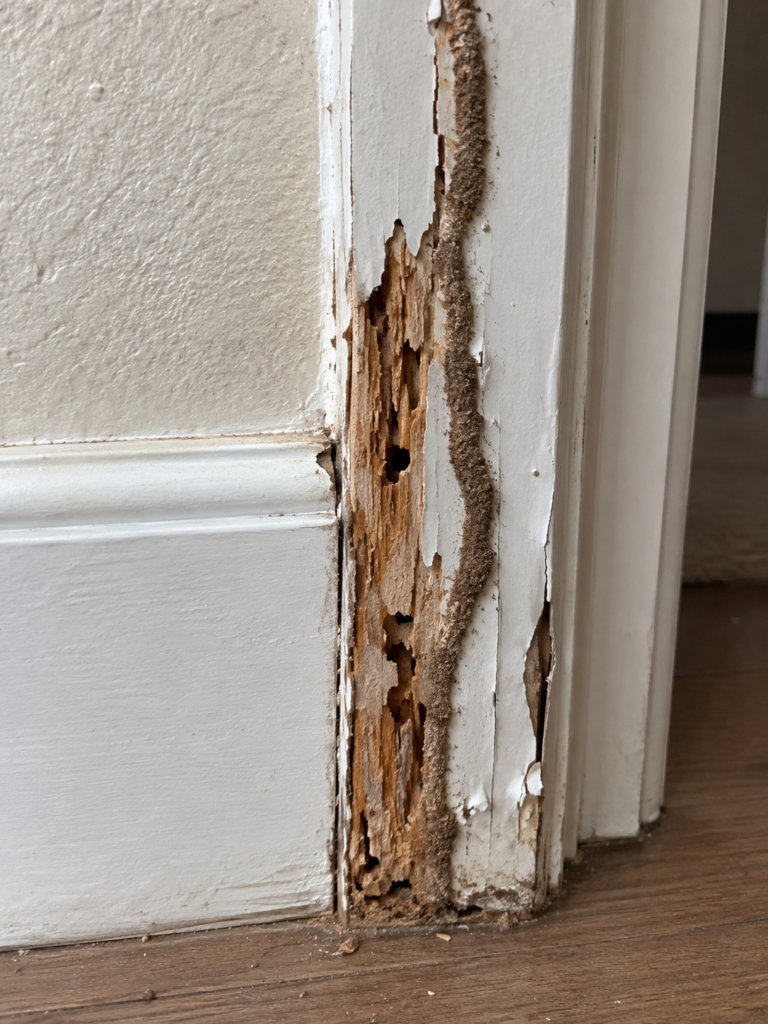
Finding out a house has termites feels like finding out it has a secret.
Something has been happening inside the walls for a while, and nobody told you until an inspector wrote it down.
The reassuring part: termite damage does not prevent a sale in Las Vegas. It changes the conversation, the timeline, and sometimes the buyer — but houses with termite damage sell here regularly.
Yes, Las Vegas Has Termites
A lot of homeowners are surprised by this. The desert doesn’t seem like termite country.
It is. Subterranean termites are common across southern Nevada, and they’re the kind that live in the soil and come up into a structure, which is exactly why they go unnoticed for so long. There’s no obvious swarm in the yard. There’s a mud tube along a foundation wall, or a baseboard that sounds hollow, or paint that blisters in a strange line.
By the time it’s visible, it’s usually been going on a while. That is normal, and it’s not a reflection on how you kept the house.
What Actually Matters to a Buyer
The single most useful thing to understand: buyers and lenders treat “active infestation” and “old damage” as two different problems.
- Active termites are a live issue. Most buyers want treatment handled before closing, and some loan programs effectively require it.
- Previous damage, treated is a repair question. How much structural wood is affected, and what does it take to fix?
- Cosmetic damage — a chewed baseboard, a section of door frame — is minor, even though it looks alarming.
- Structural damage — joists, framing, load-bearing members — is the version that actually moves a price.
An inspection report rarely sorts these out neatly for the buyer. It lists findings, the buyer reads the scariest line, and negotiation starts from there.
Where It Gets Complicated
Termite findings slow a sale for the same reasons most condition issues do:
- Inspections surface them, often late in the process, after a buyer is already emotionally committed and now feels misled.
- Financed buyers may need a clearance or treatment documented before their lender will close.
- A buyer with no repair budget may walk rather than take on unknown structural work.
- Contractors and pest companies run on their own schedules, which rarely match an escrow timeline.
- Once the buyer knows, everything else in the report gets re-read with more suspicion.
A deal falling apart at inspection is a real cost, not just a delay. The house goes back on the market with days accumulated and, often, a story attached.
Do You Have to Tell a Buyer?
Generally, yes — Nevada sellers are expected to disclose known material defects, and a known termite problem or prior damage sits squarely in that territory.
Disclosing is also the practical move. Termite evidence is one of the easier things for an inspector to find. A problem you disclosed up front is a negotiation. A problem the buyer discovers after you didn’t is a dead deal, and sometimes more than that.
If you’re unsure what your disclosure obligations look like for your specific situation, that’s a question for a Nevada real estate attorney rather than a blog post.
Treat and Repair, or Sell As-Is?
Treating an active infestation is usually worth doing regardless — it stops the damage from growing while you decide anything else.
Repairing the damage before selling is a different calculation. It tends to make sense when the damage is limited and cosmetic and the house is otherwise ready to list. It tends not to when:
- the damage reaches framing or structural members
- the full extent isn’t known until wood gets opened up
- the house needs other work too, and termites are one line on a longer list
- the property is vacant or inherited and already costing you every month
- you’d be funding repairs on a house you’re leaving anyway
Open-ended repairs are the hard part. You can price a roof. It’s much harder to price “however much framing turns out to be affected,” and buyers price that uncertainty pessimistically. Selling a house that failed inspection in Las Vegas covers that dynamic more fully if a report is what brought you here.
When a Direct Sale Is Simpler
Selling as-is removes the negotiation entirely. No clearance letter to chase, no contractor scheduling, no credit renegotiated three days before closing.
At Fast Ready Offer, we’ve purchased 80+ homes in Clark County, including houses with termite damage, houses mid-treatment, and houses where nobody was sure how far it went. We buy the property in its current condition and handle the repairs ourselves afterward. No repairs required from you, no commissions, no fees.
If you want to see the comparison honestly, you can request a no-obligation cash offer and set it beside what listing would net after treatment, repairs, holding costs, and commissions. Sometimes fixing first still comes out ahead. Sometimes it doesn’t. You should get to see both numbers.
No obligation. No pressure to decide today.
Close on your terms.
FREQUENTLY ASKED QUESTIONS
Can I sell a house with active termites?
Yes. An active infestation makes financed buyers harder to work with, since some loan programs want treatment and clearance documented before closing, but the house can absolutely be sold — including as-is to a cash buyer.
Do I have to disclose termite damage in Nevada?
Known material defects are generally expected to be disclosed, and termite damage typically qualifies. Beyond the legal question, it’s the safer path: inspectors usually find it anyway, and undisclosed problems are what collapse deals late.
Does termite damage lower my home’s value?
It depends almost entirely on whether the damage is cosmetic or structural. A chewed baseboard is a minor item. Damage to framing or load-bearing wood is a real deduction, and uncertainty about the extent tends to cost more than the repair itself.
Will a lender refuse a loan because of termites?
Refuse is strong, but some programs require a termite inspection and clearance, and an active infestation can hold up closing until it’s treated. It’s a common reason a financed sale on a termite-affected house takes longer.
How do I know whether the damage is structural?
A licensed pest control company can assess the activity, and a contractor or structural professional can assess the wood. You usually need both answers — one tells you if it’s ongoing, the other tells you what it costs.
Should I treat the house before selling?
Treating an active infestation is generally worth doing regardless, since it stops the damage from getting worse. Whether to also repair before selling is the separate decision, and depends on how deep the damage goes.
Do you buy houses with termite damage?
Yes. We buy as-is, and that includes pest damage, active infestations, and houses where the full extent isn’t known yet.