
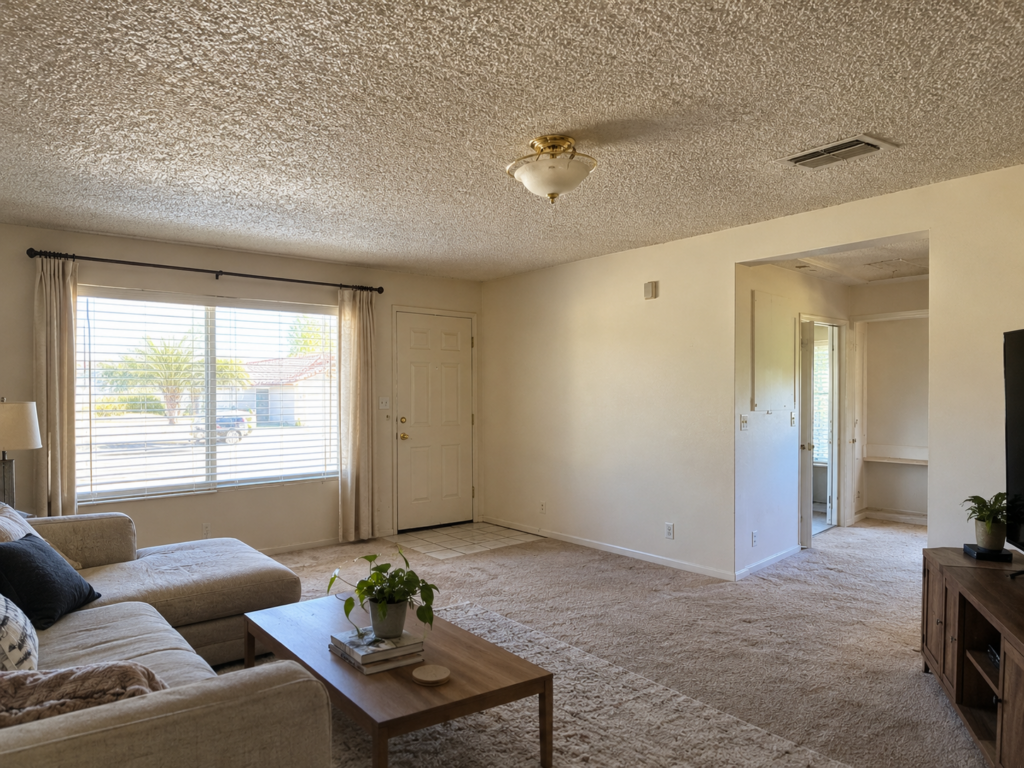
The word “asbestos” tends to stop people cold.
If an inspector flagged it, or you just learned your popcorn ceiling might contain it, you may be wondering whether your house is even sellable.
It is.
Asbestos complicates a sale. It doesn’t end one.
Why So Many Las Vegas Homes Have It
A big share of Las Vegas was built during the 1970s and early 1980s. That’s the same era when asbestos was still common in building materials.
In older homes, it most often shows up in:
- popcorn or “acoustic” ceiling texture
- vinyl floor tiles and the adhesive under them
- drywall joint compound
- insulation around older ducts or pipes
Plenty of homeowners lived in these houses for decades without knowing. Often it only comes up when someone plans a remodel or a buyer’s inspector takes a closer look.
Undisturbed vs. Disturbed
This is the part that matters most, and it’s often misunderstood.
Asbestos-containing material that’s intact and left alone is generally considered lower risk. The concern is when it gets disturbed — scraped, sanded, drilled, or torn out — and fibers get into the air.
That’s why the advice you’ll hear is usually the same: don’t try to remove it yourself. If you want to know for sure, have it tested by a qualified inspector. If it needs to come out, that’s a job for a licensed abatement contractor, and local rules apply.
How Asbestos Affects a Traditional Sale
When you list with an agent, asbestos can create friction in a few places:
- Inspections: A buyer’s inspector may note suspected asbestos and recommend testing.
- Negotiations: Buyers often ask for a price reduction or a credit to cover abatement.
- Financing: Some lenders or appraisers may want the issue addressed before the loan closes.
- Buyer nerves: Even when the material is intact, the word alone can scare off a first-time buyer.
None of that makes a sale impossible. It does tend to add time, back-and-forth, and the risk that a buyer walks away late in the process.
What About Disclosure?
Nevada sellers generally fill out a disclosure form covering known conditions in the home. If you know about asbestos, that usually belongs on it.
The rules can get specific, so confirm your own obligations with your agent, attorney, or escrow officer. The safe instinct is simple: if you know about it, don’t hide it. A sale built on disclosure holds together better than one that falls apart after inspection.
Should You Remove It Before Selling?
Not necessarily.
Abatement costs vary widely depending on how much material there is and where it is. On top of the removal, you may need to repair ceilings or floors afterward. Then you’re back to prepping the house for showings.
Some sellers do it and are glad they did. Others look at the cost, the timeline, and the disruption and decide it isn’t worth it — especially if they’re already planning to move.
It comes down to your budget and how soon you need to be done.
When Selling As-Is Makes More Sense
If the idea of testing, abatement, repairs, and a nervous buyer sounds like more than you want to take on, selling directly is another path.
A cash buyer who buys as-is takes the house in its current condition. No removal. No repair list. No waiting on a lender to sign off.
That can make sense if:
- the house is older and asbestos is one of several issues
- you inherited the property and don’t want to manage a project
- you’ve already had a buyer back out after inspection
- you’d rather move on than spend months on preparation
It isn’t the right choice for everyone. But it’s worth seeing next to the alternatives.
A Clear Path Forward
At Fast Ready Offer, we’ve purchased 80+ homes in Clark County, and plenty of them were older houses with the kind of materials that make traditional buyers hesitate.
If you’re weighing whether to remove asbestos first or sell it as-is, it helps to see real numbers on both sides. Our post on selling a house that failed inspection walks through what happens when an inspection turns up problems.
When you’re ready, you can request a no-obligation cash offer and compare it with what fixing first would cost you.
Close on your terms.
Frequently Asked Questions
Can I sell my Las Vegas house if it has asbestos?
Yes. Asbestos doesn’t prevent a sale. It may affect inspections, negotiations, or financing with a traditional buyer, but homes with asbestos sell regularly.
How do I know if my popcorn ceiling has asbestos?
You can’t tell by looking. The only way to know is to have a sample tested by a qualified inspector. Ceilings installed before the mid-1980s are the most likely to contain it.
Is it dangerous to live in a house with asbestos?
Intact, undisturbed material is generally considered lower risk. The concern is when it’s damaged or disturbed. If you have questions about your specific home, talk to a qualified asbestos professional.
Can I remove asbestos myself before selling?
It isn’t recommended. Disturbing asbestos is what creates the risk, and removal is typically handled by licensed abatement contractors under local rules.
Do I have to disclose asbestos when selling in Nevada?
Nevada sellers generally disclose known conditions on a seller’s disclosure form. Confirm the specifics for your situation with your agent, attorney, or escrow officer.
Will a cash buyer still buy a house with asbestos?
Many will. At Fast Ready Offer, we buy houses as-is, so you don’t need to test, remove, or repair anything before selling to us.
How fast can I sell a house with asbestos for cash?
We make a written cash offer within 24 hours, and you can close in as little as 7 days — or later, if you need more time.