
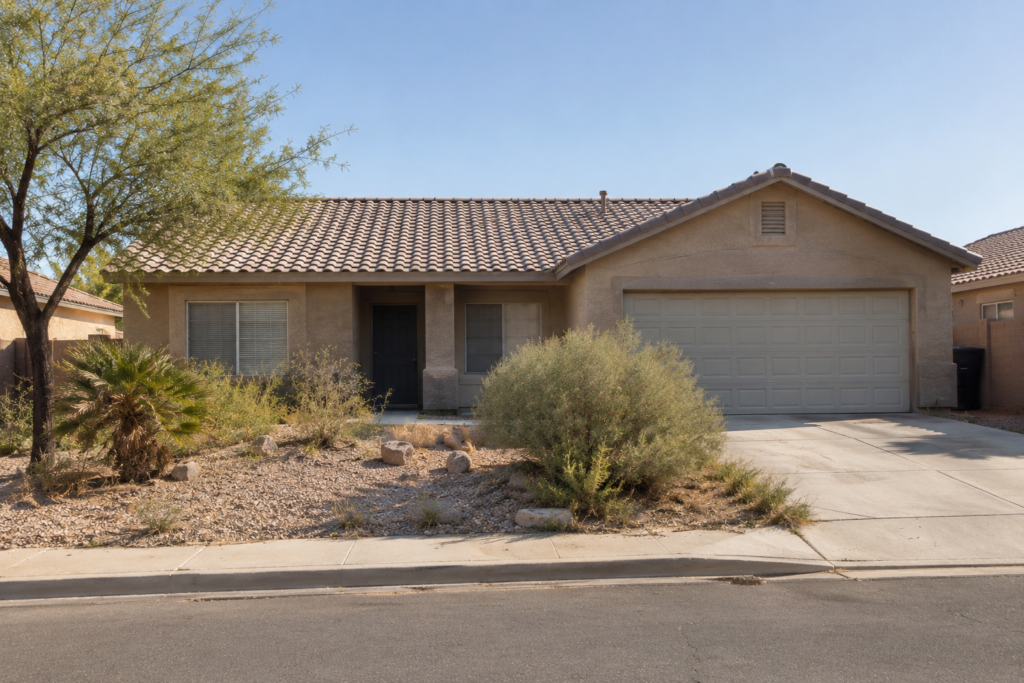
Most inherited houses don’t sit empty because of probate.
When heirs disagree, a firm number helps. Here’s how we buy inherited homes in Las Vegas, even when not everyone is on the same page yet.
They sit empty because two or three people who love each other can’t agree on what to do.
One wants it sold. One wants to keep it in the family. One isn’t answering texts. And meanwhile the house sits there in the Las Vegas sun, quietly costing everyone money.
If that’s your situation, it’s more common than you’d think, and it’s usually solvable.
Why Disagreement Costs So Much More Than People Expect
A house that nobody has decided about is not free to own.
While the conversation drags on, somebody is paying:
- property taxes
- insurance — which gets harder and pricier once a house is vacant
- utilities, at least enough to keep it from cooking
- landscaping, pool service, pest control
- any mortgage that’s still on it
And the house itself keeps aging. Empty houses in this valley don’t hold steady; sun and heat work on them, small leaks go unnoticed, and vacant properties draw exactly the kind of attention you don’t want.
A year of “we’ll figure it out after the holidays” is often the single most expensive thing an inheriting family does.
First, Find Out What You Actually Own
Before the family debate makes sense, somebody has to answer a boring question: who legally has the say?
That depends on how the property passed. A house held in a trust, a house that goes through probate, and a house left without a will all move differently, and the answer decides who can sign what. If the estate had no will, our post on selling a house after a death without a will in Las Vegas covers how that path typically runs.
If there’s an executor or personal representative, that person often has authority the other heirs don’t. If the house has already passed to several people as co-owners, then generally everyone on title has to agree to a sale.
That single fact — executor authority versus shared title — changes the entire conversation. Get it confirmed by a Nevada probate or real estate attorney before anybody digs in.
The Options Families Actually Use
One sibling buys the others out. Common and clean when it works. It requires the buying sibling to have cash or qualify for financing, and it requires everyone to accept a value. An appraisal usually helps more than another family meeting.
Everyone agrees to sell and split the proceeds. The simplest outcome, and the one most families land on once the holding costs get real.
Rent it and share the income. This sounds like a compromise and is often the hardest choice of all — it makes co-owners into co-landlords, and it usually only works with a written agreement and one person clearly in charge.
Bring in a neutral third party. A mediator, an estate attorney, or sometimes just an appraiser. Most stalemates are really disagreements about what the house is worth or what it meant, and a number from someone with no stake in it moves people.
Court. If co-owners truly can’t agree, one of them may have the right to ask a court to force a sale — a partition action. It’s slow and expensive, and it’s an attorney conversation, not a blog conversation. But its existence is worth knowing, because families often settle once they understand it’s the alternative.
Why a Real Number Ends Most Standoffs
Here’s the pattern we see: the argument isn’t really about selling. It’s about the fear of selling wrong. Nobody wants to be the one who let Mom’s house go for too little.
A written offer — one everyone can look at — takes the argument out of the abstract. Then it’s not “should we sell?” It’s “is this number better than another year of taxes, insurance, and a house nobody’s living in?” That’s a question a family can actually answer.
At Fast Ready Offer, we’re a family-owned cash buyer, and we’ve purchased more than 500 homes since 2017. We buy inherited houses as-is — full of belongings, deferred repairs, decades of things nobody wants to sort. No repairs, no cleanout, no agent commissions, no closing costs on your end. A fair cash offer within 24 hours, and closing on your family’s timeline.
We’re buyers, not attorneys, and none of this is legal advice — for the probate and co-ownership questions, talk to a Nevada attorney about your specific situation.
If a real number would help your family stop circling, you can request a no-obligation cash offer and put it on the table. If everyone looks at it and decides to keep the house, that’s a good outcome too. At least the decision got made.
Close on your terms.
FREQUENTLY ASKED QUESTIONS
Can one sibling force the sale of an inherited house in Nevada?
Sometimes, through a court process called a partition action. Whether it applies depends on how title is held and where the estate stands. It’s a question for a Nevada attorney, not something to assume in either direction.
Do all heirs have to agree to sell?
Generally yes, if the house has already passed to them as co-owners on title. If the property is still in an estate with an executor or personal representative, that person may have authority to sell. Confirm which situation you’re in first.
What if one sibling is living in the house and won’t leave?
This comes up often, and it’s genuinely complicated — occupancy, contribution toward expenses, and co-ownership rights all interact. Get legal guidance before taking any action on your own.
Who pays the taxes and insurance while we decide?
Usually the estate, or whichever heir steps up. That’s exactly why stalemates get expensive — the bills don’t pause for the conversation. Keeping receipts matters if there’s a buyout later.
Can we sell the house before probate is finished?
Sometimes, depending on the type of probate and the authority granted. Cash buyers can often work with probate timelines. Your attorney or the personal representative can tell you where things actually stand.
Do we have to clean the house out before selling?
Not for a cash sale. We buy as-is, contents included. For a traditional listing, you generally would.
How do we figure out what it’s worth if we can’t agree?
An independent appraisal, a market analysis, and a written cash offer give you three reference points. Most families find the disagreement shrinks once there are real numbers instead of guesses.
Do you buy inherited houses with multiple owners?
Yes. It just means everyone with legal authority needs to sign. We’ll work with your timeline while the family sorts that part out.
- Selling an inherited house in Las Vegas
- Inherited a Hoarder House in Las Vegas? Here’s What Family Members Should Know
- Can You Sell a Vacant Lot in Las Vegas for Cash?
Get my cash offer or call (725) 210-6339